
Deck Railing Ideas: Cable, Metal, Glass and Wire
A railing is the only part of a deck whose job is to be in the way. Judge it by one question: how much of the view does it take? Everything else follows from the answer.
The One Test That Decides Everything
Before comparing materials, establish where you will be when you look through the railing. Standing on a deck, your eye is well above the top rail and the railing barely registers. Sitting down, which is what decks are for, your eye lands close to the top rail, and everything below it becomes the view.
This is why the two variables that matter most are the visual weight of the top rail and the density of whatever fills the space beneath it. A slim top rail with widely spaced cables all but disappears from a seated position. A wide timber top rail with closely spaced balusters, at exactly the same height, produces a horizontal band across the middle of the view and a picket fence below it.
Height, infill spacing, load requirements and when a guard is required at all are set by your local building code and differ between jurisdictions. Confirm them with your local building department before choosing anything: those requirements set the limits inside which every idea below has to work.
Cable Railing Ideas
Modern Safety,
Timeless Views
Cable is the most popular contemporary railing for one simple reason: horizontal lines at a distance read as almost nothing. From a seated position a cable infill is close to invisible, and it is the only common option that keeps a panoramic view genuinely intact.
The trade-offs are worth knowing in advance. Cable systems need periodic tension checks, the end posts carry real load and cannot be an afterthought, and in coastal environments the fittings are the part that shows wear first.
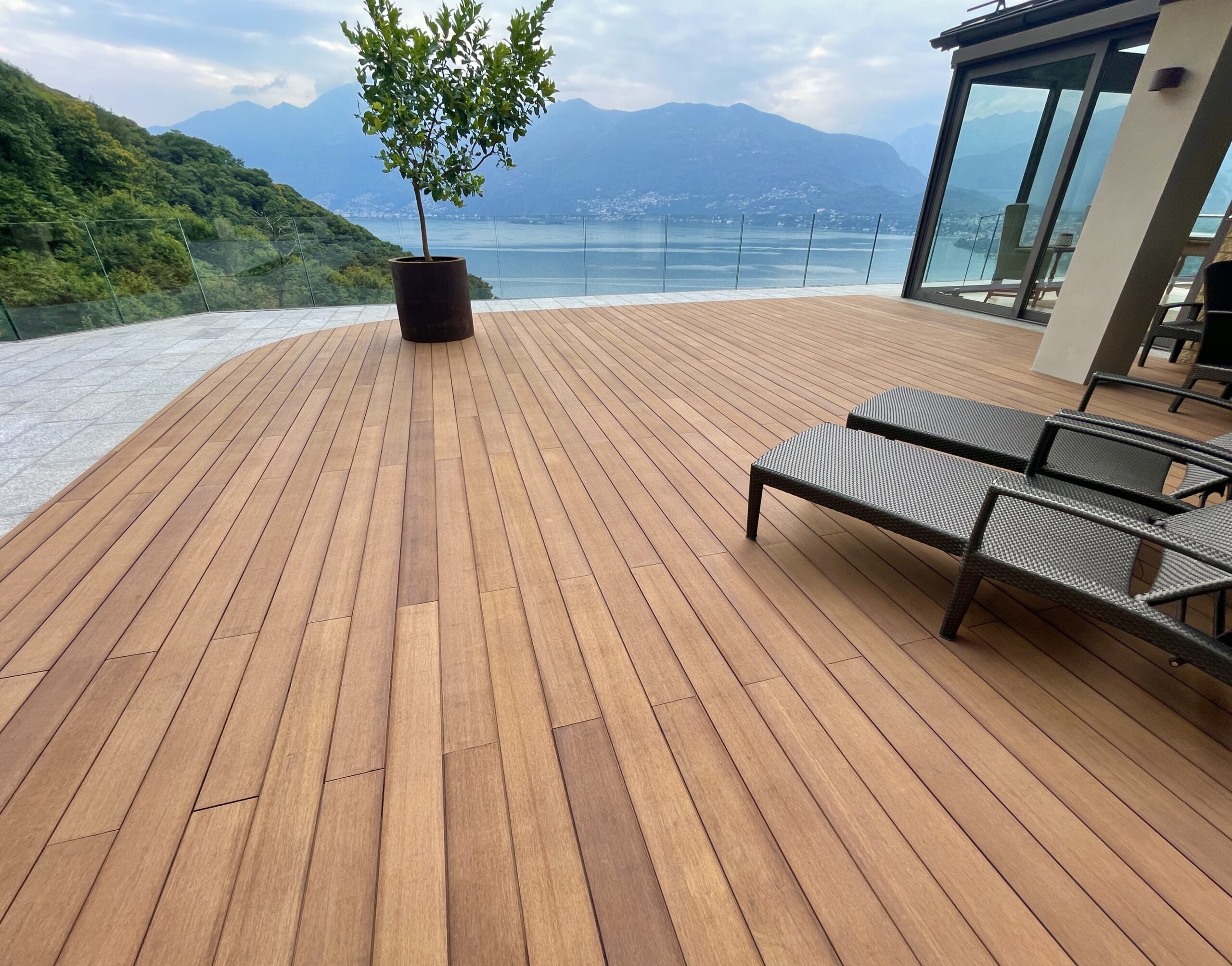
Horizontal runs between end posts
The classic layout, and the one that most needs substantial end posts, because cable systems rely on tension.
Vertical cable
Less common and slightly denser to the eye. Suits places where a horizontal run would invite climbing.
Cable with a wood or metal top rail
The compromise most projects land on: the infill disappears and the top rail gives somewhere to rest a hand and a drink.
Metal Railing Ideas
Metal Railing Ideas
Metal is the most flexible railing language available, from the almost invisible to the deliberately heavy. As a design decision it comes down to three things: the profile of the posts, the density of the infill and the color.
Slim vertical pickets, dark finish
The most common contemporary answer. Dark metal recedes against a garden far more than pale metal does, and slim profiles at a wider spacing read as a screen rather than a fence.
Minimal frame, open panel
Posts and a top rail, with the infill doing as little as possible. The closest metal gets to disappearing altogether.
Perforated or mesh panels
Denser and more private. Useful where the railing is also doing the work of a screen against a neighboring property.
Structural frame, horizontal emphasis
Horizontal lines carry the eye along the deck rather than stopping it, which suits long, narrow terraces.
Glass and Frameless
Glass is the only option that removes the infill from the view entirely, which makes it the default where the view is the reason the deck exists. Two versions: framed, with posts at intervals, and frameless, where the glass is held in a base channel and there is nothing above it.
Both share the same practical reality: glass shows everything, from salt and rain marks to dust and fingerprints, and needs cleaning on a schedule the other options do not. In coastal and pool settings, and on rooftop terraces, that is a weekly consideration, not a seasonal one.
Wire and Mesh
Wire mesh and welded panel infills sit between cable and solid. They are denser than cable, so they take more from the view, but they are considerably cheaper than a tensioned cable system and far more forgiving to install, since they do not depend on load-bearing end posts.
Mesh also suits properties with children or pets better than horizontal cable, which can be climbed. Visually, the finer the mesh and the darker the finish, the more it recedes.
Decking Solutions
Economical Deck
Railing Ideas
Railings are a larger share of a deck budget than most people expect, particularly on small decks where the perimeter is long relative to the area. Five ways to spend less without it showing.
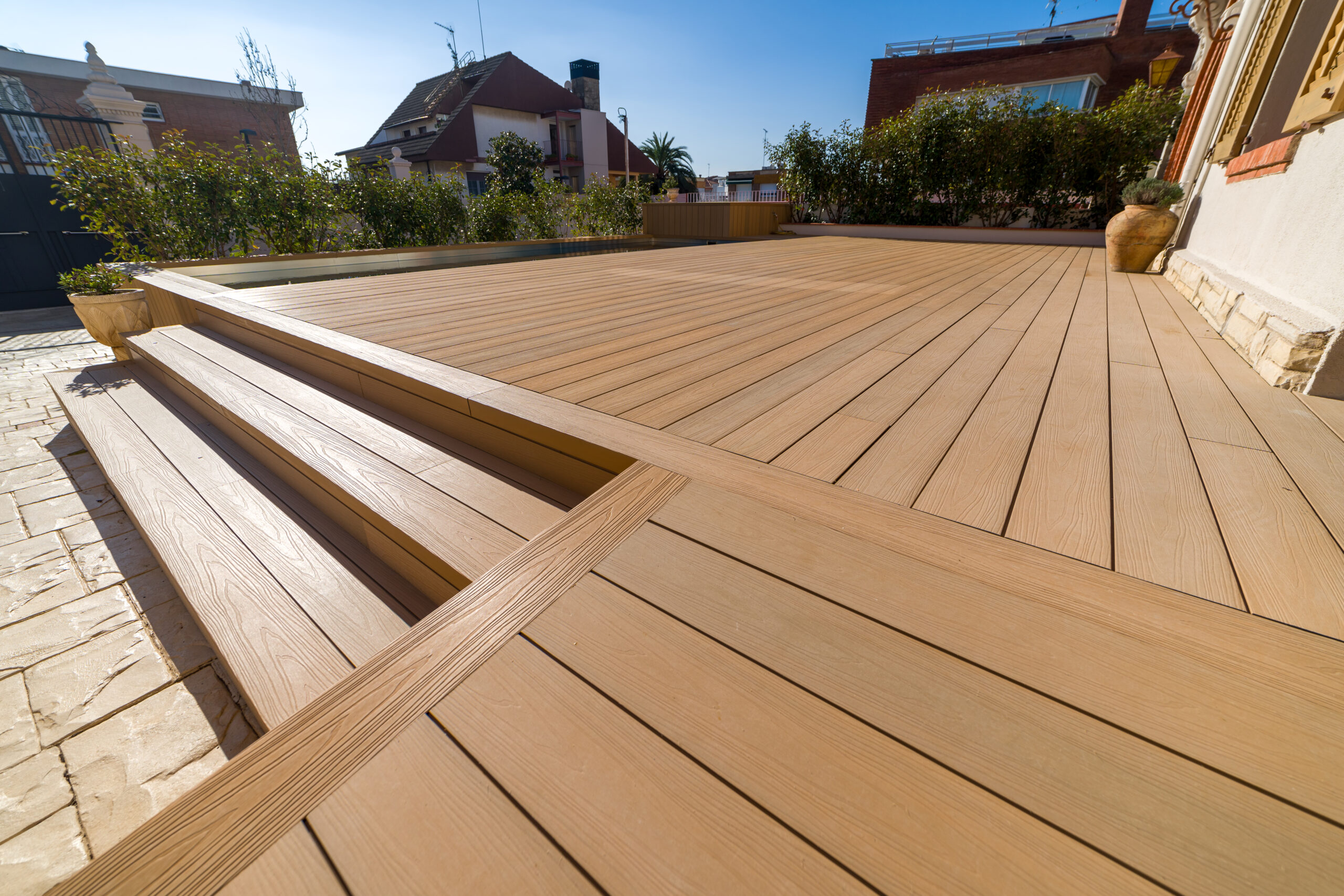
Pool Deck Railing Ideas
Around water, two things change. Sightlines matter more, because supervision of a pool is the whole point of being able to see across it, which pushes strongly toward cable, glass or minimal metal. And the environment is harsher: chlorine, salt and constant splash accelerate wear on fittings, fixings and finishes far faster than on a garden deck. Whatever is chosen, the fittings are the part to specify carefully.
Pool barrier and fencing requirements are set locally and differ between jurisdictions. A pool barrier and a deck guard are not necessarily the same thing, and one does not automatically satisfy the other. Confirm both with your local building department before the layout is fixed.

Exterior Decking
Where the Railing Meets the Deck
This is the detail that separates a designed deck from an assembled one. However good the railing, the eye eventually lands where the post passes through the deck surface and where the deck meets its edge.
Matching the Railing to the Deck
Two approaches work and a third does not. Matching, with railing and deck in the same tone family, makes the whole thing read as one system and is the safest choice. Contrasting deliberately, usually a dark railing against a lighter deck, is the more architectural option and puts every line on display, so it demands a clean edge detail.
What rarely works is a railing in a tone close to the deck but not the same. Near-matches read as mismatches, and outdoors, where light changes all day, they read as mismatches more often than not.
Common Questions
Deck Railing Design
Answers to the most common questions about deck railing design, materials, cost and what your local building department will want to see.
01What is the best deck railing for a view?
02How much does a cable railing cost compared to other options?
03What are economical deck railing ideas?
04How high does a deck railing have to be?
05What railing works best around a pool?
06Should the railing match the decking?
The Railing Is Half the View. The Deck Is the Other Half.
Whatever railing you choose, the junction where it meets the deck surface is what people end up looking at. Tell us the deck square footage and the height above grade, and we will walk you through the edge and fixing details that make it read clean.
Or email usa@exterpark.com. Back to all design inspiration.