
Modern Deck Design: Color, Line and Surface
Modern architecture is a discipline of subtraction. Which is why the most common mistake in a modern deck is not the color, it is the hardware: a grid of screw heads turns a clean plane into a dotted one.
Four Traits Every Modern Deck Shares
Modern is not a color. It is a set of relationships between surface, line and edge, and each one is a decision you make before a single board is ordered.
No screw pattern, no plugs, no colour-matched caps that fade at a different rate than the board. Exterpark boards lock to an aluminum substructure with the patented Shark Clip, so nothing penetrates the visible face.
Modern exteriors hold to two or three materials. The deck is one of them, so it should either match the dominant tone of the facade or deliberately oppose it, never sit halfway between.
Board width, board direction and the gap between boards are proportional decisions, not defaults. A wide board in a small space reads heavy; a narrow board across a long terrace reads busy.
Where the deck meets the wall, the pool coping, the step or the ground is where modern design succeeds or fails. Fascia, skirting and trim carry more weight than any colour choice.
Deck Color Palettes
Four Palettes That
Hold Up Outdoors
Colour choice on a deck is different from colour choice indoors, for one reason: the deck is seen in full sun, in wet conditions, and against the sky. A tone that looks refined on a sample board can read flat and washed out across 600 square feet.
These four palettes work at full scale, and each one carries a trade-off worth naming at design stage rather than discovering it in July.
Charcoal and graphite
The default of contemporary architecture, and the most forgiving alongside glass, steel and white render. Dark tones absorb more heat, so in hot climates they pair best with shaded terraces, covered porches and pool surrounds.
Warm neutrals and teak tones
The palette that reads modern without reading cold. Warm mid-browns hold their character against timber cladding, stone and planting, and disguise pollen, dust and pool splash better than any dark tone.
High contrast
A dark deck against a pale facade, or the reverse. The most architectural of the four and the least forgiving: every edge, joint and fastener is on display. It only works when the surface is genuinely uninterrupted.
Monochrome and tonal
Deck, cladding and skirting in adjacent tones of the same family, so the horizontal and vertical planes stop reading as separate elements. This is where slat cladding and decking in a matched tone do their best work.
Grain, Texture and How a Surface Reads at Distance
Grain is a distance-dependent decision. From ten feet, an embossed wood texture reads as timber. From thirty feet, which is how most people actually see a deck, grain disappears and only tone and sheen remain. This is why two decks in the same colour can look completely different.
The rule of thumb: the more contemporary the architecture, the lower the sheen and the more restrained the grain. Exterpark Tech composite carries realistic wood-grain textures with a low-sheen finish; Exterpark Wood gives real, non-repeating grain where authenticity is the point; Exterpark Bamboo sits between the two, dense and uniform.
Board Layout
Board Width,
Direction and Layout
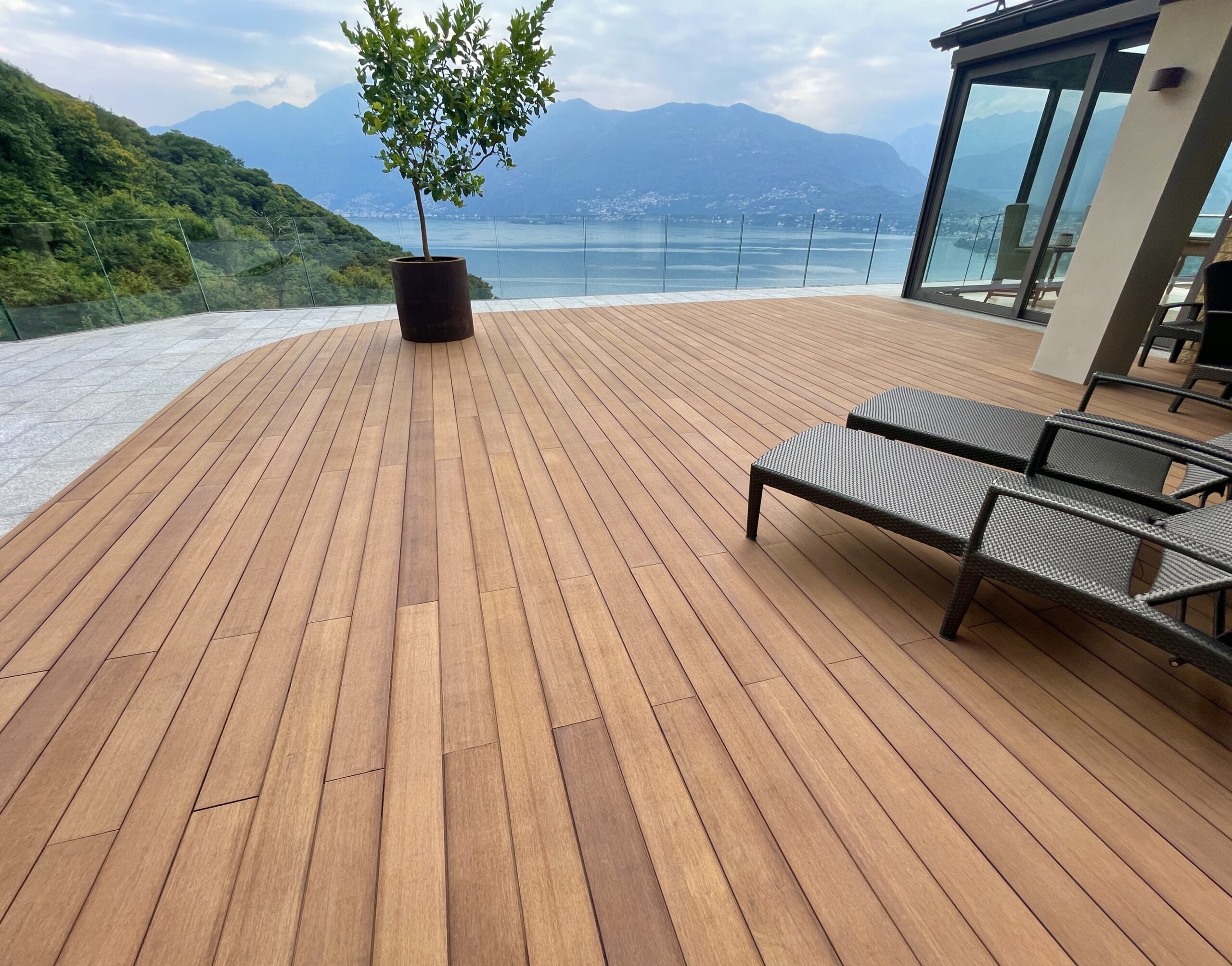
Board direction is the cheapest way to change how a space is perceived. Boards running along the long axis stretch a terrace; boards running across it make a narrow balcony feel wider. In modern schemes, align direction with the dominant line of the architecture.
Deck Skirting
Modern Deck Skirting Ideas
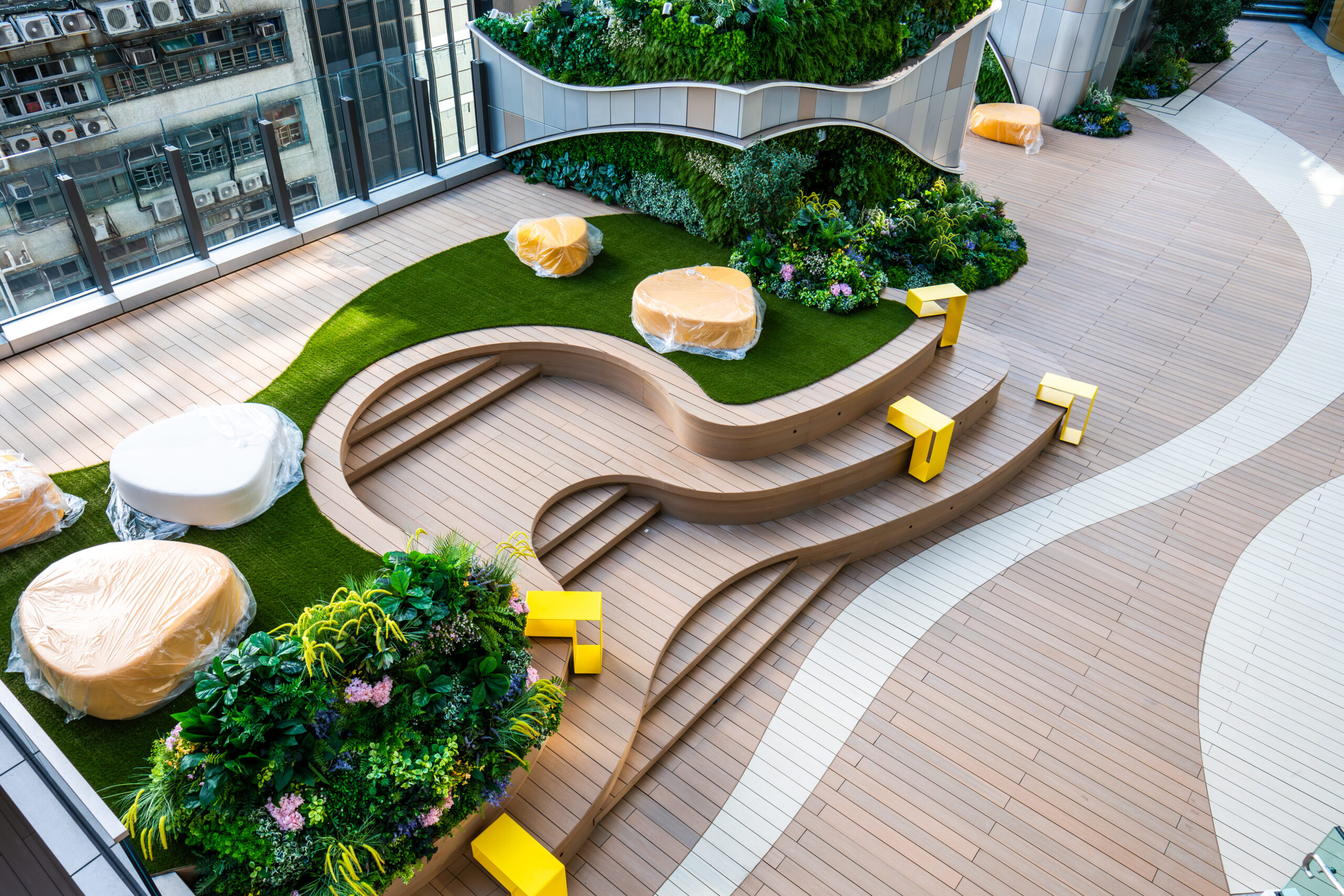
Skirting is the vertical face between the deck surface and the ground. It is the detail most often left to the installer, and the one that most often undoes an otherwise clean scheme.
Continuous slat skirting
Vertical or horizontal slats in the deck tone or one shade darker, running the full length of the elevation, so deck and skirting read as a single volume.
Shadow gap, or recessed skirting
The skirting sits back from the deck edge, so the deck appears to float and the shadow line does the work. The most contemporary option and the most demanding of the edge detail.
Flush fascia
A clean fascia in the same finish as the deck, with no visible fixings, meeting the surface in a single line. Understated and reliable.
Full concealment
Where levels allow, the structure is buried and the deck meets grade, planting or gravel directly. No skirting at all, and the most modern answer of the four.
Modern Deck Railing: The Short Version
Railing is the other vertical element, and in modern schemes the goal is almost always the same: interrupt the view as little as the code allows. Cable, slim metal posts, frameless glass and minimal top rails all serve that goal.
Material and finish should either match the deck exactly or disappear into the background. A railing in a third colour is a third material, and modern schemes rarely survive a third material.
Exterior Decking
Matching the Deck to a Modern Home Exterior
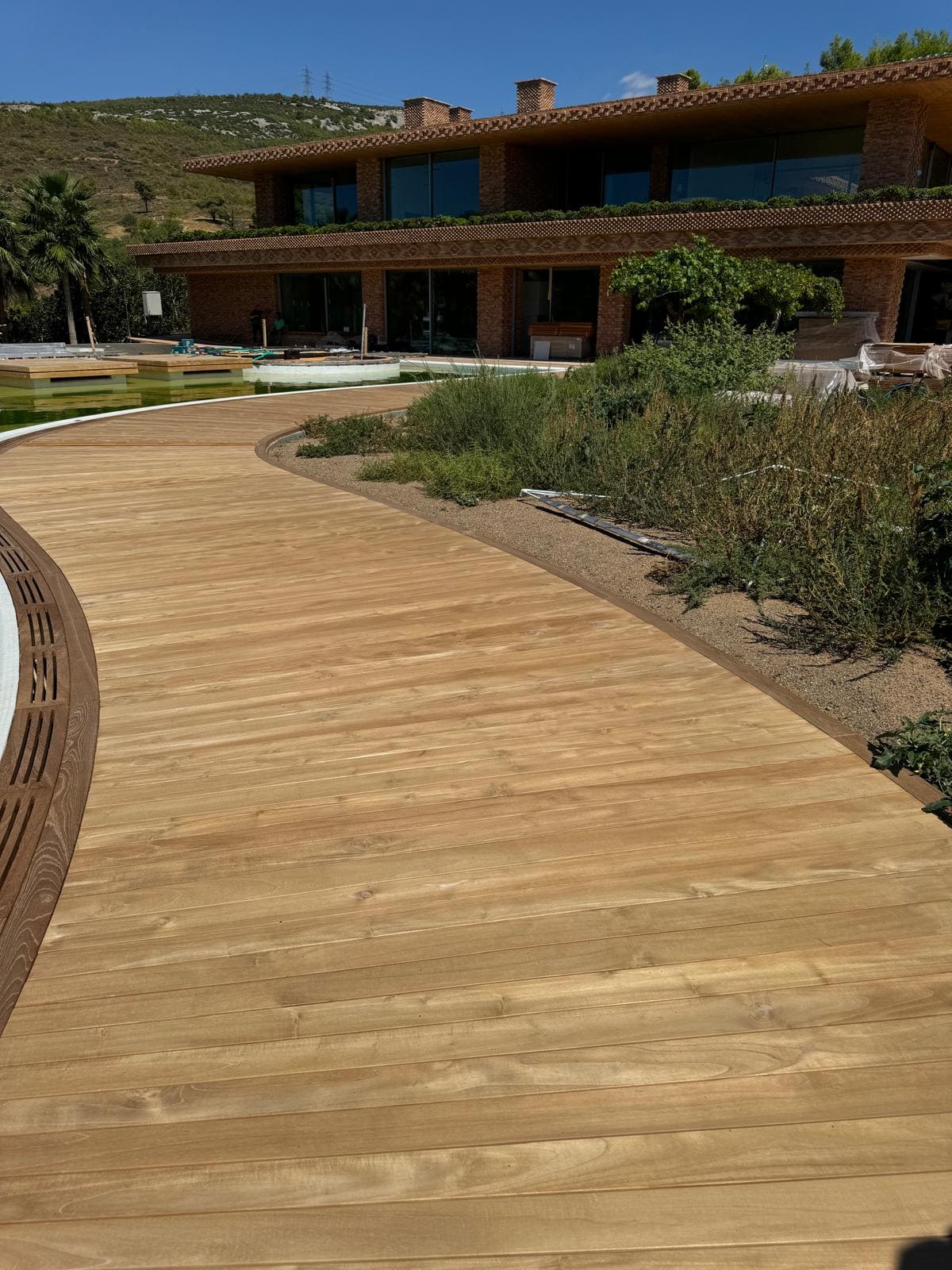
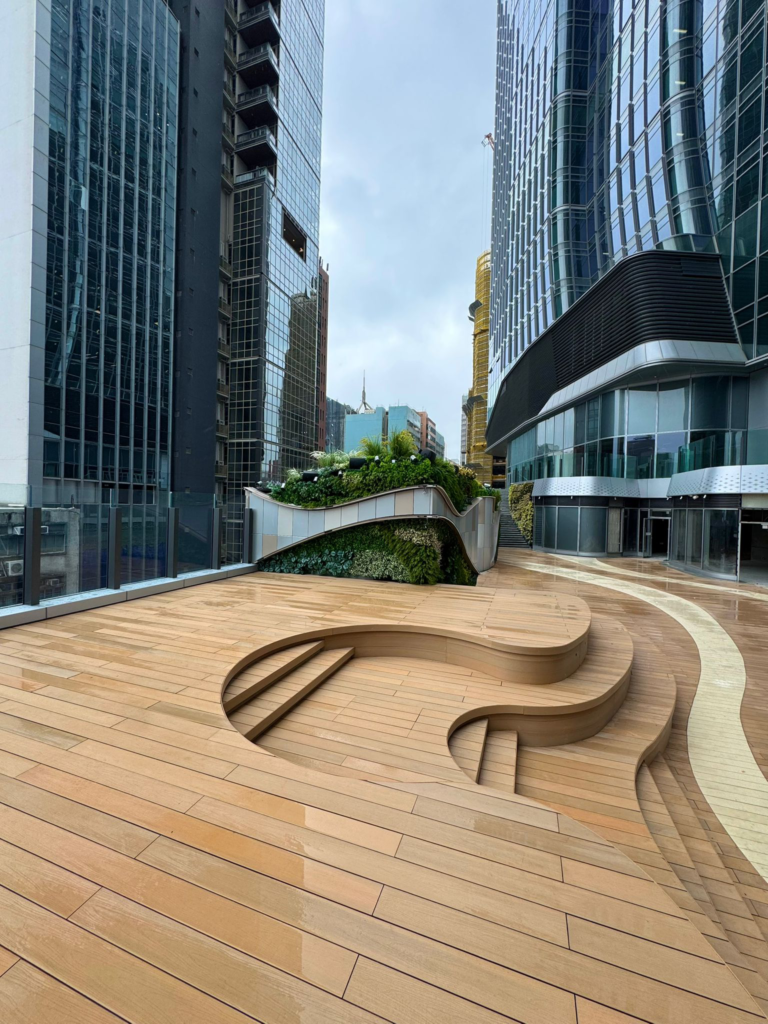
A deck is rarely designed in isolation. It is read together with the facade behind it, and the relationship between the two is what a visitor actually perceives. The same logic scales to commercial and hospitality work, where the deck usually has to agree with a facade that was designed years earlier and cannot be changed.
Choosing the Material
Design decisions eventually become a material decision. All three run on the same aluminum substructure and the same patented Shark Clip, so every decision in this guide holds regardless of which one is chosen.
Consistent, controlled and low-sheen. For schemes where the palette must stay exactly as specified, with no maintenance and no weathering drift. Twenty-year warranty against fading under normal use.
Authentic, non-repeating and warm. For projects that want real timber and accept that the tone will move over time unless it is maintained.
Dense, tight and uniform. A middle path: a natural material with a highly consistent appearance across a large surface.
The clip system was recognized as Most Innovative Construction Tool at the International Builders’ Show. See how it works.
Common Questions
Modern Deck Design
Answers to the questions that come up most often when planning this, from the design decisions through to what your local building department will want to see.
01What deck color is best for a modern house?
02Do dark decks get too hot?
03How do I get a deck with no visible screws?
04What is the most modern deck skirting?
05Should deck boards run parallel or perpendicular to the house?
06Can I match my deck and my cladding?
See These Details in Finished Projects
Colour, grain and sheen are decisions best made with the material in hand and in daylight. Request samples, or walk through finished residential and hospitality installations to see how each palette behaves at full scale.
Or email usa@exterpark.com. Back to all design inspiration.