Materials compared
The Best Heat-Resistant Decking for Florida: Composite vs. Ipe vs. Bamboo
A Florida deck takes strong sun, high humidity and termite pressure at the same time. This guide compares composite, ipe and other hardwoods, and bamboo on heat underfoot, upkeep and what sits underneath, so you can choose the best heat-resistant decking for each area.
Why decks get hot (and why color matters most)
A deck board in direct sun absorbs part of the light that reaches it and turns it into heat, and the share it absorbs depends mostly on color and surface reflectance. The Heat Island Group at Lawrence Berkeley National Laboratory reports that dark pavements absorb 80 to 95% of sunlight and that solar-reflective surfaces stay cooler in the sun than conventional ones. In an infrared image the lab publishes, a light pavement segment reads about 17 °C (30 °F) cooler than the dark segment beside it.
Decking follows the same physics. A pale gray or sand-colored board absorbs less sunlight than a dark brown or charcoal board of the same material, so color is the first decision for anyone looking for deck boards that don’t get hot. Material still plays a part, because density, surface texture and how quickly a board gives off heat once shade arrives all change how it feels underfoot. Even a light board warms up in full sun, which is why shade from a pergola, an umbrella or a tree belongs in the same conversation.
Before specifying, leave samples of the shortlisted colors in direct sun on site at midday and check them by hand and barefoot. That comparison captures the real orientation, the reflections from walls, glass and water, and the hours when the deck will actually be used.
Composite in Florida sun
Exterpark Tech is the lowest-upkeep option in this comparison: composite decking with a realistic wood texture that needs no staining or sealing and carries a 20-year warranty against fading under normal use. On a Florida deck that takes strong sun for most of the year, the fading warranty is the specification that tells you how long the color is expected to hold. Composite boards, like any dense surface, warm in direct sun, and dark composites warm more than light ones. The manufacturer tested its light colors in Dubai at 41 °C (about 106 °F). That figure describes the ambient conditions of the test, not the temperature of the board surface, so it speaks to how the boards hold up in extreme heat rather than to how they feel underfoot.
Light colors for full sun
Tested by the manufacturer in Dubai at an ambient 41 °C. Pair them with shade wherever people walk barefoot.
20-year fading warranty
Coverage against fading under normal use, the point that matters most on decks exposed to sun all day.
No staining or sealing
Routine cleaning replaces the sand, stain and seal cycle of timber, which keeps upkeep predictable on large surfaces.
Ipe and other hardwoods
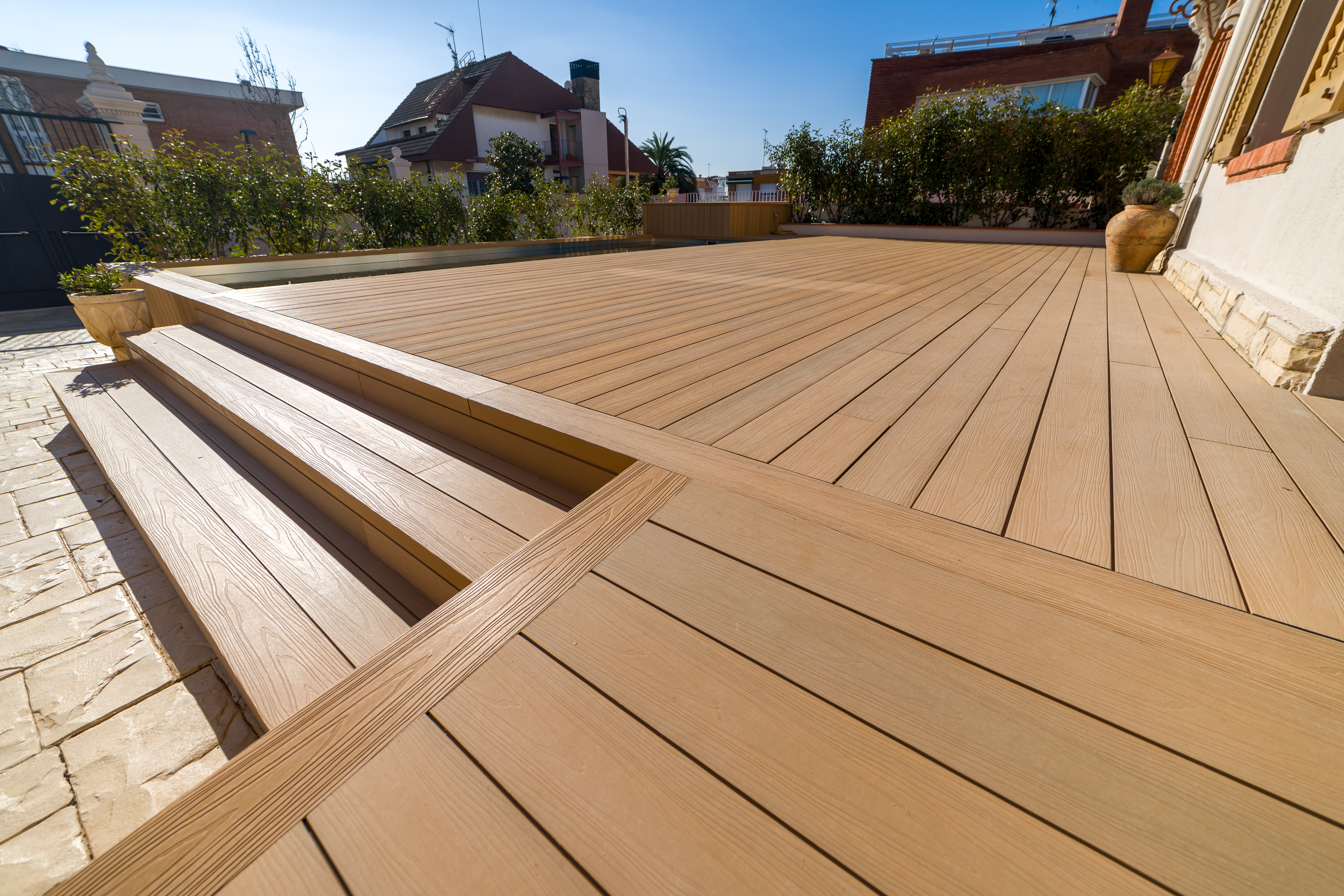
Ipe is the usual reference in any comparison of composite decking vs ipe: a very dense tropical hardwood valued for its natural durability and the look of real timber. Exterpark Wood is the hardwood decking line, with Ipe, Kumaru and Teak, including FSC-certified Teak, plus thermo-treated woods, all installed on the same hidden clip system as the composite and bamboo lines.
Heat underfoot in hardwood follows species and tone, and the same color rule applies: a darker board warms more in the sun. The larger difference is upkeep. The USDA Forest Products Laboratory’s Wood Handbook names protection from water, sunlight and weathering as the most important consideration for wood used outdoors. Left without a finish, hardwood weathers and changes color over time; owners who want to keep the original tone clean, oil or refinish it on a regular schedule. Under Florida sun and humidity that schedule is a real line in the operating budget.
Bamboo: the sustainable alternative to ipe
Exterpark Bamboo is bamboo decking carbonized under a patented press into a dense structural board with the look of hardwood. Its case rests on sustainability: Exterpark points out that an ipe tree takes about 70 years to grow, while bamboo grows about 70 cm (roughly 27 inches) a day. For architects and hospitality projects with environmental goals, that growth cycle is the main reason to shortlist it. The bamboo vs composite decking choice usually comes down to material preference and project goals. Composite offers a 20-year fading warranty and no finishing cycle; bamboo offers a natural, fast-growing material with a hardwood appearance. Heat underfoot depends on the tone you select, so the sample test in direct sun applies here as well.
Carbonized under a patented press
A dense structural board with a hardwood look.
Fast-growing raw material
About 27 inches of growth a day, according to Exterpark, against roughly 70 years for an ipe tree.
Same installation system
Hidden Shark Clip fastening on an aluminum substructure, like the other two lines.
Humidity and termites: what’s underneath matters too
In Florida, humidity and termites affect the structure below the boards as much as sun affects the surface. A comparison limited to the boards leaves out the framing, which on many decks is still wood.
Termite pressure in South Florida
Researchers at UF/IFAS report that the Miami-Fort Lauderdale area is the only place in the continental United States where the ranges of the Asian and Formosan subterranean termites overlap, and a UF/IFAS projection estimated that half of South Florida’s structures will be at risk of subterranean termite infestation by 2040. Wood joists and beams under a deck are the exposed element.
Aluminum substructure for all three materials
Composite, hardwood and bamboo from Exterpark all install on an aluminum substructure. Aluminum gives termites nothing to feed on and does not rust, so the frame is protected whichever board sits on top.
Hidden fastening with the Shark Clip
The patented Shark Clip (formerly called Magnet) fixes each board without visible screws and won Most Innovative Construction Tool at the International Builders’ Show. The manufacturer states that installation is up to three times faster than conventional fixing.
Every board removable
Each board lifts out on its own, without unscrewing its neighbors. That makes it practical to clear leaves and debris from under the deck, run a cable or inspect the structure, then click the board back into place.
Side-by-side comparison
The table sums up the three board families on the points that usually settle a Florida project. Prices are left out because they depend on species, color, square footage and site conditions.
| Factor | Composite (Exterpark Tech) | Hardwood (Exterpark Wood) | Bamboo (Exterpark Bamboo) |
|---|---|---|---|
| Heat underfoot | Follows color; choose light colors for full sun | Follows species and tone | Follows tone; test samples in sun |
| Maintenance | No staining or sealing; routine cleaning | Cleaning plus periodic oiling or refinishing to keep the tone | Follow the manufacturer’s care guide |
| Color over time | 20-year warranty against fading under normal use | Weathers and changes color if left unfinished | Ask for the manufacturer’s data |
| Sustainability | No finishing products to reapply | Natural timber; FSC-certified Teak available | Fast-growing bamboo (about 27 inches a day, per Exterpark) |
| Appearance | Realistic wood texture | Real timber grain, varies by species | Hardwood look from carbonized bamboo |
| Substructure and fastening | Aluminum, Shark Clip, each board removable | Aluminum, Shark Clip, each board removable | Aluminum, Shark Clip, each board removable |
Which one for your Florida project
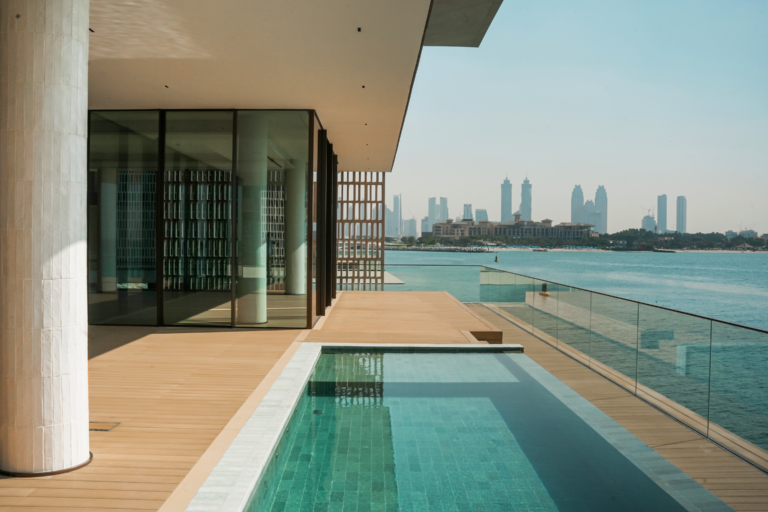
Pool surrounds combine barefoot traffic with sun for most of the day, which points to light composite or a pale hardwood, plus shade over the loungers. Our guide to pool deck materials compares decking with pavers, stone, concrete and tile.
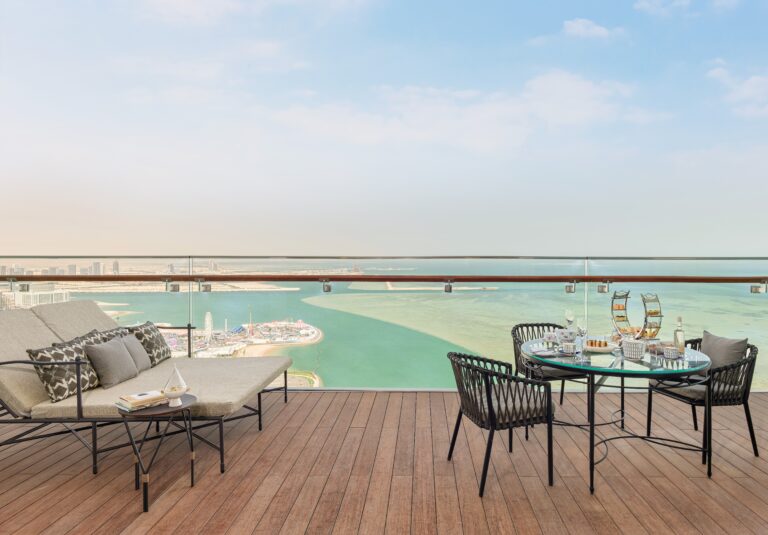
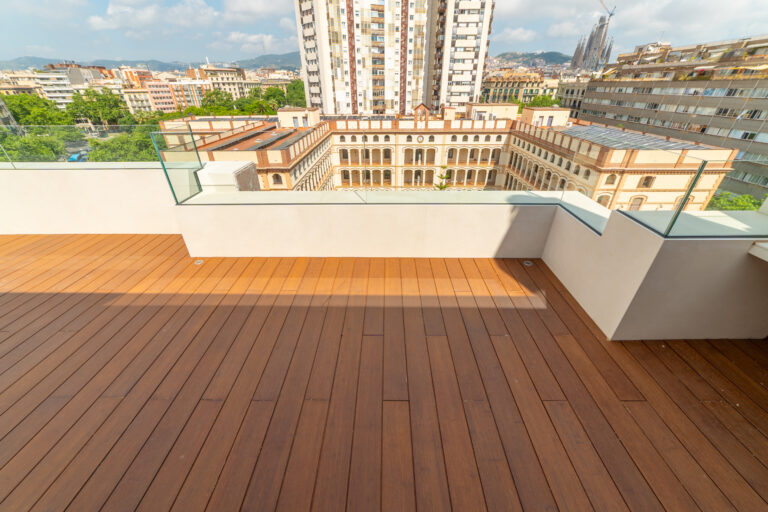
On rooftops and terraces, walls and glass reflect extra sun onto the surface, and weight, drainage and access to the waterproofing govern the build. Light composite or bamboo on an aluminum substructure keeps every board removable for inspections; confirm structural capacity with a structural professional before any rooftop work.
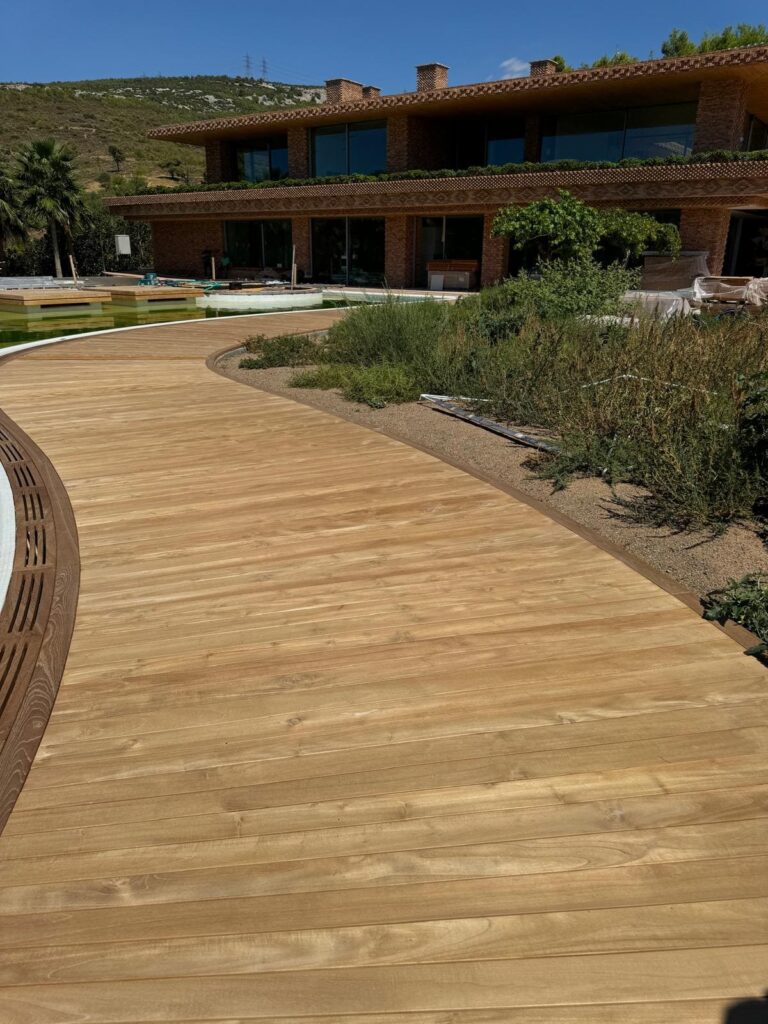
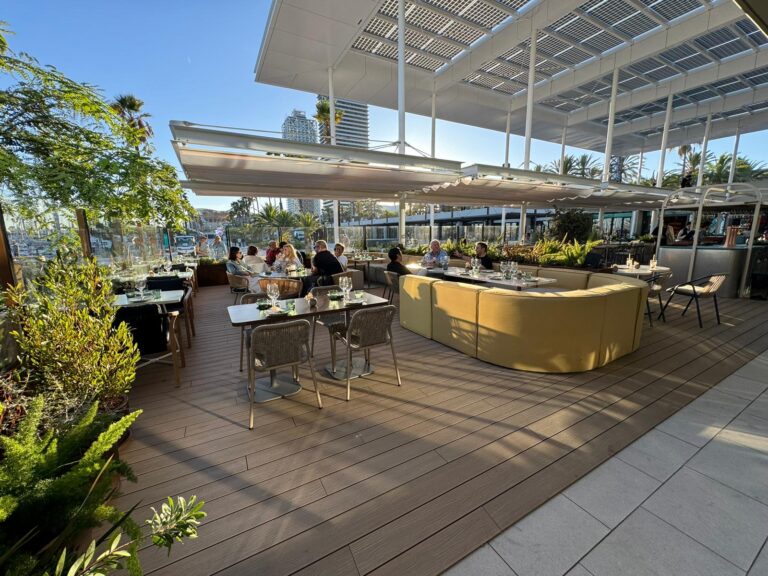
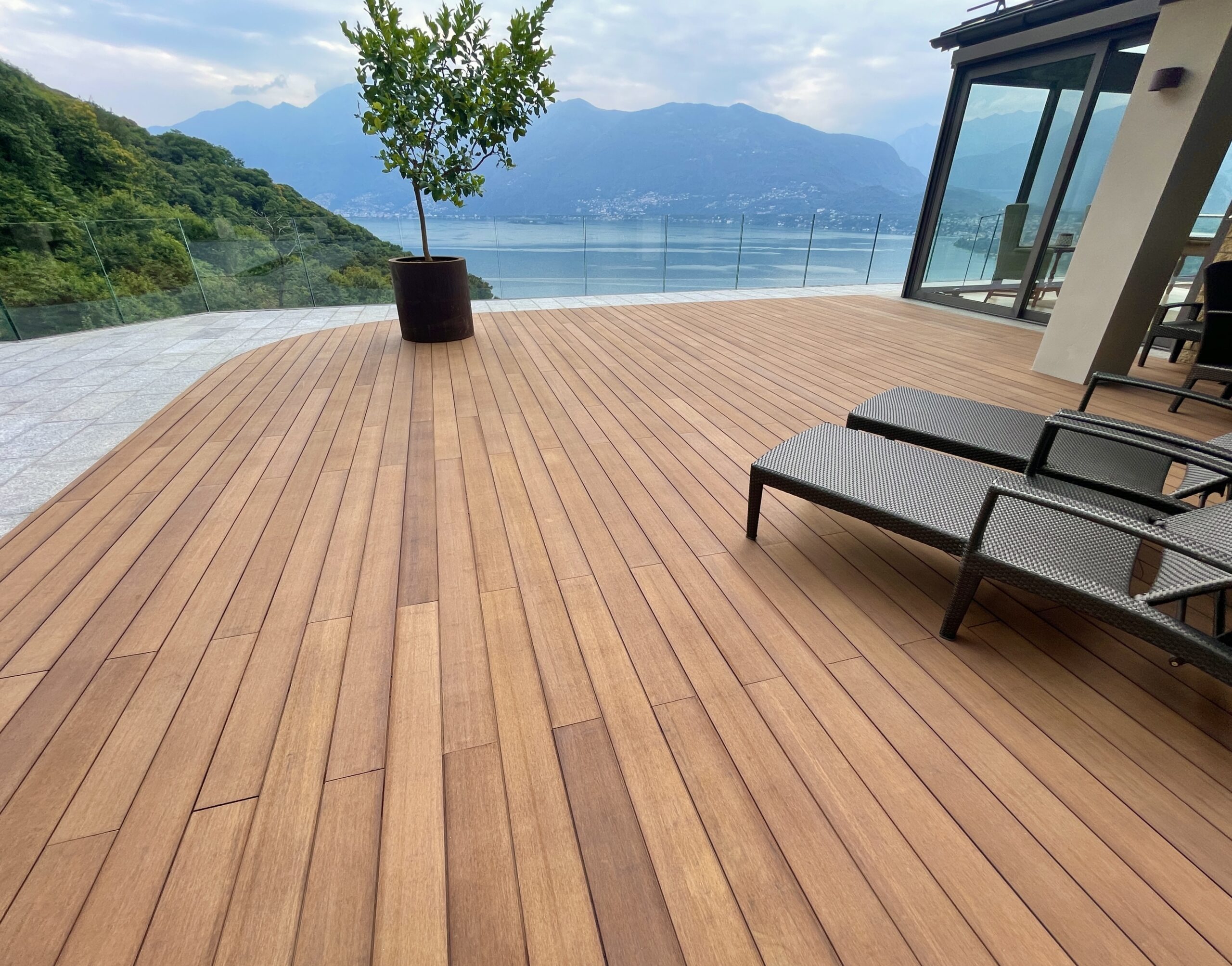
On waterfront homes and hospitality projects with heavy traffic, the cost of upkeep over the years tends to weigh more than the initial look. Composite avoids a refinishing cycle, hardwood suits projects where real timber is the brief and maintenance is budgeted, and bamboo fits projects with sustainability targets. The best decking for Florida heat is often a mix: light composite in full sun and a wood or bamboo accent in covered areas, all on the same substructure.
Exterpark USA supplies architects, contractors and homeowners from its warehouse in Hialeah, with Cedro Rojo as authorized distributor. For the full range of materials, cities and project types, see our page on decking built for Florida conditions.
Common questions
Heat-resistant decking FAQ
Short answers to the questions that come up most when choosing decking for hot, humid climates.
01What is the best heat-resistant decking material?
02Are there deck boards that don’t get hot?
03What is the most durable composite decking?
04How long should an ipe deck last?
05What are the alternatives to wood decking?
Compare composite, ipe and bamboo for your project
Send us the square footage, the city, the main use of the deck (pool, rooftop, terrace or waterfront) and how many hours of direct sun it takes. We will come back with the materials and colors that fit the site.