Hospitality
Restaurant and Hotel Decks in Miami: What to Plan Before You Build
Restaurant patio decking in Miami has to handle full service, strong sun and a rainy season of near-daily storms. This guide covers layout, materials and how to plan repairs so one damaged board does not take the whole terrace out of service.
Why outdoor seating pays in Miami
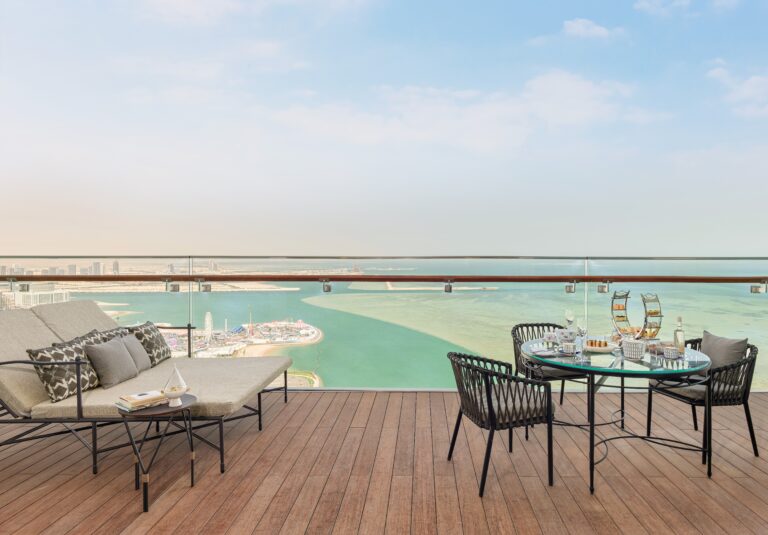
Miami-Dade County received more than 28 million visitors in 2024, the highest total it has recorded in a single year, according to the Greater Miami Convention & Visitors Bureau. The same report places the destination fourth in hotel occupancy among the 25 largest U.S. hotel markets. Much of the hospitality offer in a market like this is built around outdoor space: terraces facing the water, hotel pool decks and rooftops that stay in use well into the evening.
For an operator, a well-built deck extends the usable floor of the business without enlarging the building, and the climate allows outdoor service for much of the year. The return depends on how the deck performs over time. A surface that fades, splinters or has to close for refinishing takes seats away on the days the terrace would otherwise be full.
Outdoor seating rules, including permits for terraces and sidewalk cafés, are set by each city and by Miami-Dade County. Check the requirements with the local authority before you fix the layout.
Planning the space: dining, bar and events
A good restaurant deck design starts from how the space works at full capacity: where guests sit, where staff move and where equipment and utilities run. Most hospitality terraces combine three uses, plus the weather protection that keeps them open.
Dining areas
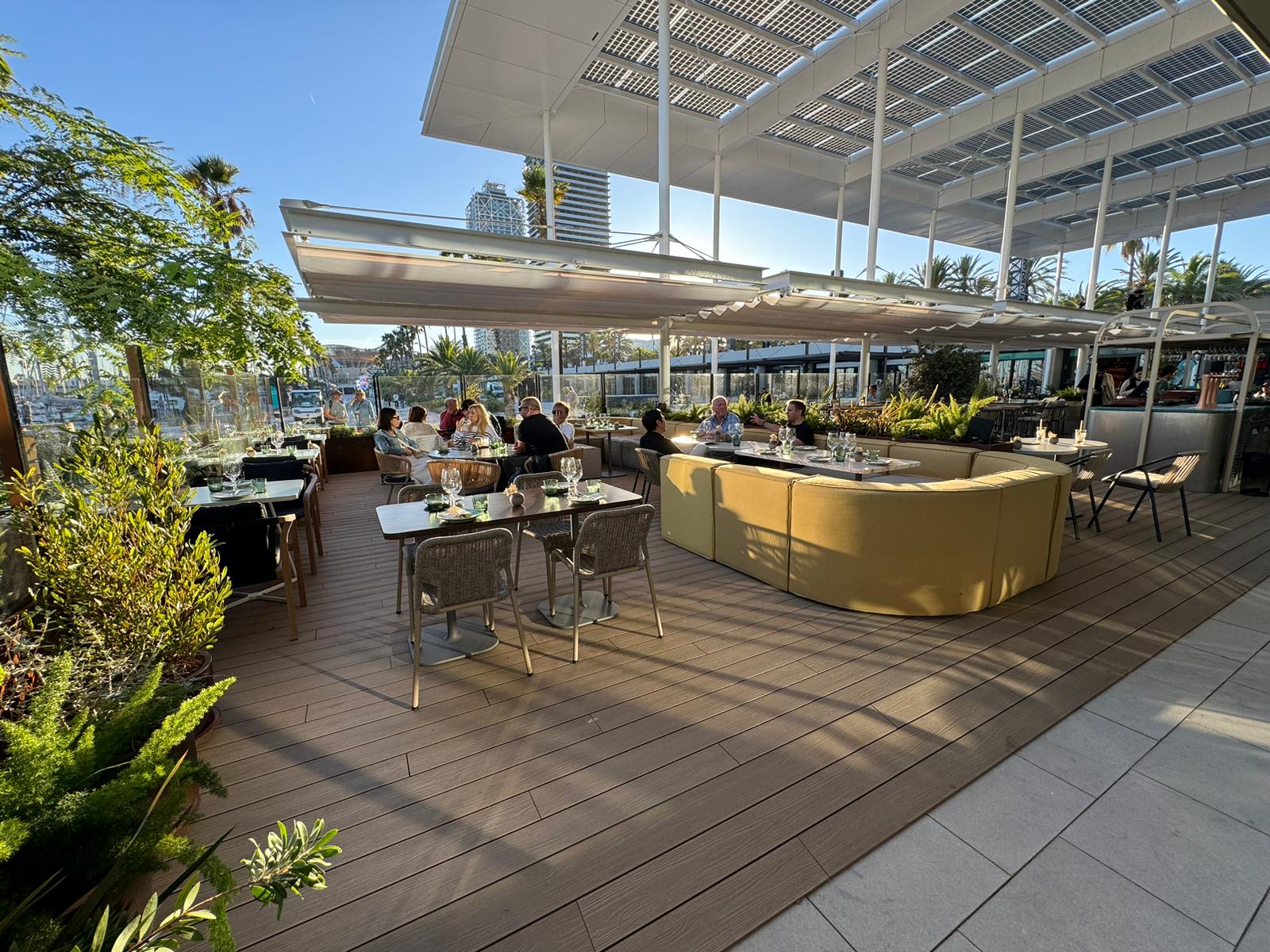
Plan table spacing around service as well as seat count. Servers need clear routes from the kitchen door without steps or level changes, and tables near the edge need room for chairs to pull back. One continuous level across the dining area keeps service moving and removes thresholds that staff carrying trays have to watch for.
Patio bar and service stations
A bar concentrates water, ice, glassware and foot traffic in a few square feet. Place it where drainage, power and water lines can reach it, and plan how those lines will be serviced later. On a raised deck, the space under the boards is where they usually run.
Event space
Terraces that host private events need open floor that can be reset quickly for a standing reception, live music or a long table. Keep fixed elements such as planters and built-in seating at the perimeter, and ask the structural engineer to design the deck for the heaviest layout you plan to run.
Shade, rain and drainage
The National Weather Service Miami office dates the South Florida wet season from May 15 to October 15 and describes near-daily showers and thunderstorms through it. Awnings, large umbrellas and covered zones keep tables open during passing storms, and the deck below has to shed water and dry quickly so service can resume.
Materials that survive heavy traffic, heat and rain
Commercial decking on a Miami terrace takes constant foot traffic, chair legs, spilled drinks, strong sun and heavy rain. According to the National Weather Service, 60 to 70% of the region’s average yearly rainfall falls during the wet season, so the surface spends months moving between soaked and dry. Exterpark offers three board families for this kind of hospitality decking, all fixed to the same aluminum substructure, which gives termites nothing to feed on and does not rust. Our page on hospitality and restaurant decking shows the system on finished terraces.
Exterpark Tech (composite)
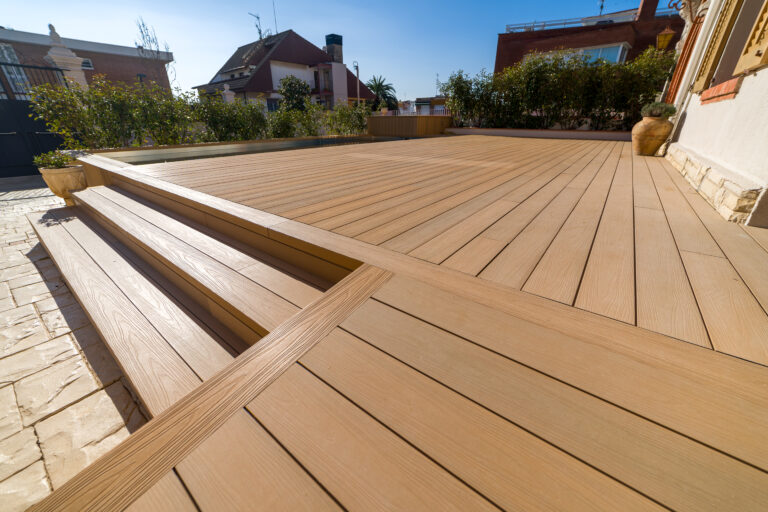
A composite board with a realistic wood texture and no staining or sealing cycle, backed by a 20-year warranty against fading under normal use. Lighter colors are the usual choice for terraces in full sun.
Exterpark Bamboo
Bamboo carbonized under a patented press into a dense structural board with the look of hardwood. Exterpark reports installations in hotels in Dubai, and the line suits projects with sustainability goals.
Exterpark Wood
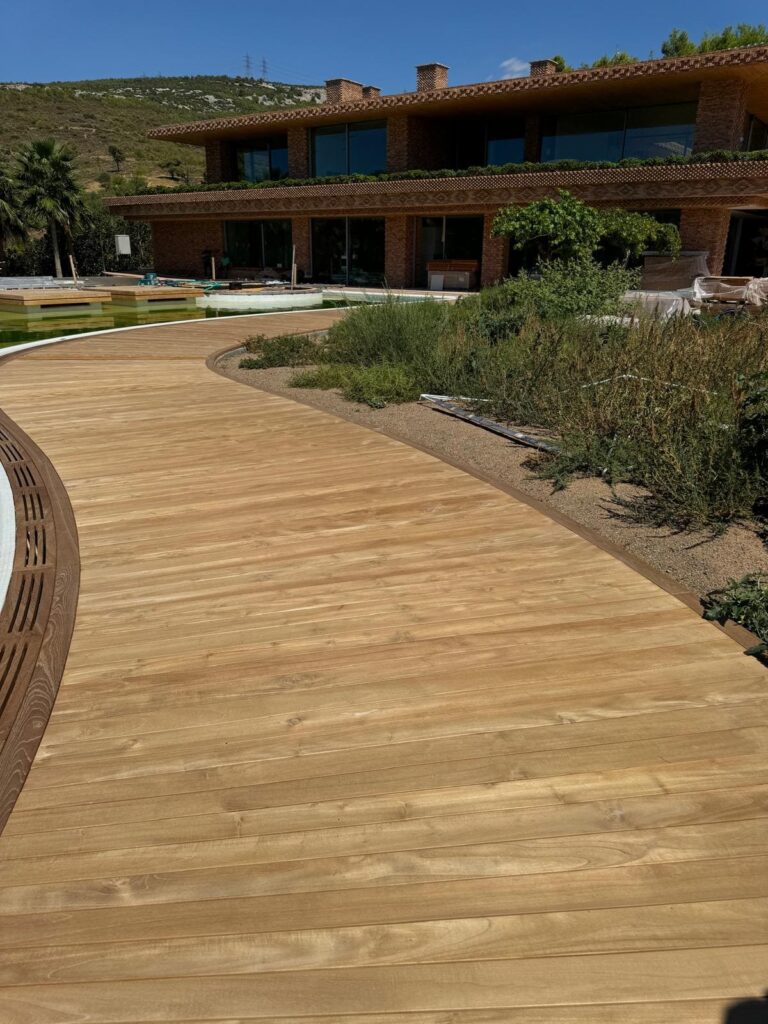
Ipe, Kumaru, Teak (including FSC-certified Teak) and thermo-treated woods, for venues that want real timber and plan periodic cleaning and refinishing as part of operations.
Repairs without closing the terrace
Every commercial deck takes damage at some point: a board cracked by a dropped keg, a stain that will not lift, a light fixture that needs new wiring underneath. On a screwed or glued deck, reaching one board often means unfastening several around it, and the work zone grows with every board removed.
Exterpark boards are held by the patented Shark Clip system, a hidden fastening (formerly called Magnet) that won Most Innovative Construction Tool at the International Builders’ Show. Each board is individually removable: it lifts out by itself, the area below becomes reachable for cleaning, drains or conduit, and the board clicks back into place. A replacement board goes in the same way.
For a restaurant or hotel, that keeps most repairs small and contained. Staff can rope off a few square feet and keep serving the rest of the terrace, and the work can often be scheduled before opening hours. The manufacturer states that the system installs up to three times faster than conventional fixing, which also shortens the closure needed for a new terrace or a renovation.
With no visible screws on the surface, there are also no screw heads to rust or trap moisture on a floor that is washed down every night.
Pool decks and rooftops for hotels
Hotels usually need decking in more places than the restaurant terrace. The pool surround and the roof ask the most of the system, and both depend on reaching what sits under the boards.
Hotel pool deck
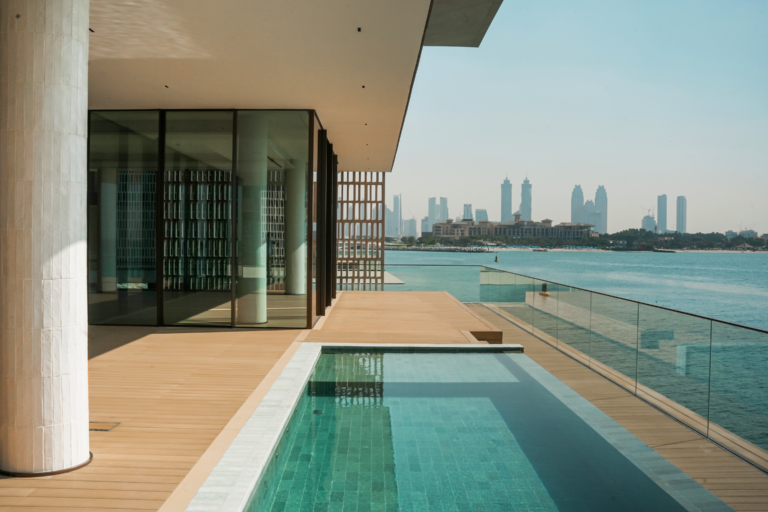
A hotel pool deck hides return lines, skimmer piping and lighting conduit. With boards that lift out one at a time, maintenance staff can reach them without cutting the surface. See how the system works on pool decks.
Rooftop terraces
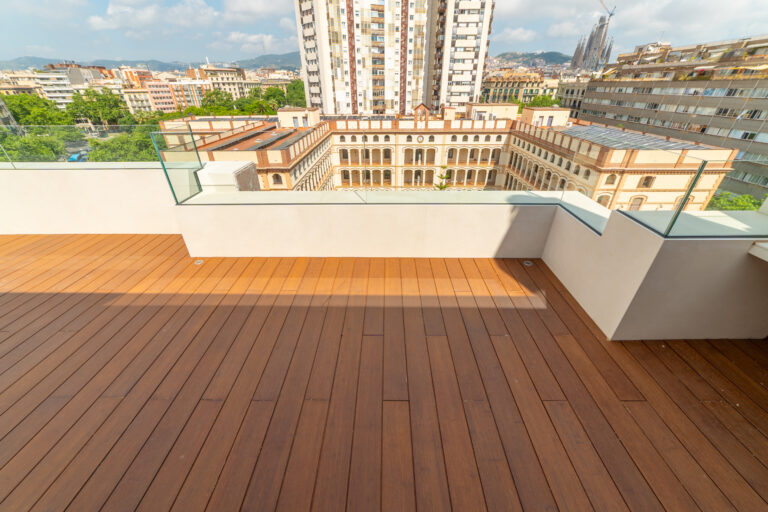
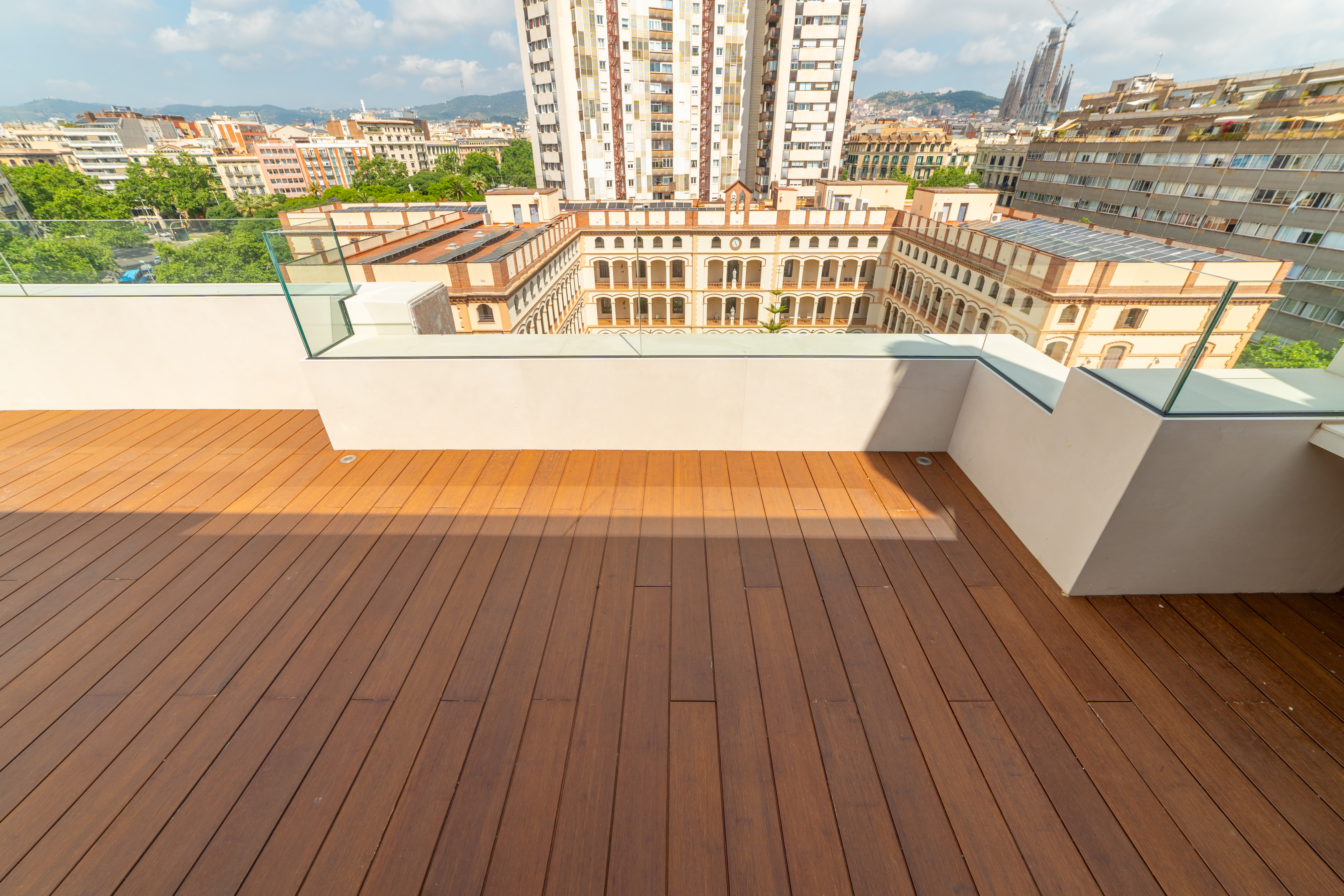
On a roof, the deck sits over a waterproofing membrane that will need inspection during the life of the building. Removable boards on an aluminum substructure keep the membrane and roof drains accessible. Load capacity and drainage have to be confirmed by a structural engineer for each roof. More on rooftop decks.
International hotel references
Exterpark decking is installed in hotels in Dubai, according to the company, where terraces and pool areas face intense sun and constant guest use.
Working with Exterpark in South Florida
Exterpark USA works with architects, contractors and hospitality owners from its warehouse in Hialeah, with Cedro Rojo as authorized distributor. If you are comparing a decking supplier for hotels or restaurant terraces in Miami-Dade, that means a local point of contact and a warehouse in the same county as the project.
Bring plans or photos of the space, the approximate square footage, the uses you expect (dining, bar, events, pool or rooftop) and the opening date you are working toward. With that in hand, talk to our team and we will come back with the material and color options that fit the project.
Common questions
Commercial decking FAQ
Short answers to the questions that come up most when planning a restaurant or hotel deck in Miami.
01Is composite decking suitable for commercial use?
02How long does a commercial deck last?
03Can decking go over an existing concrete slab?
04Do I need a permit for a restaurant patio in Miami?
05Can a damaged board be replaced without closing the terrace?
Plan your restaurant or hotel deck with a specifier
Send us the approximate square footage, the location (ground level, pool or rooftop), the uses you expect and photos or plans of the space. We will come back with the materials and colors that fit the project.