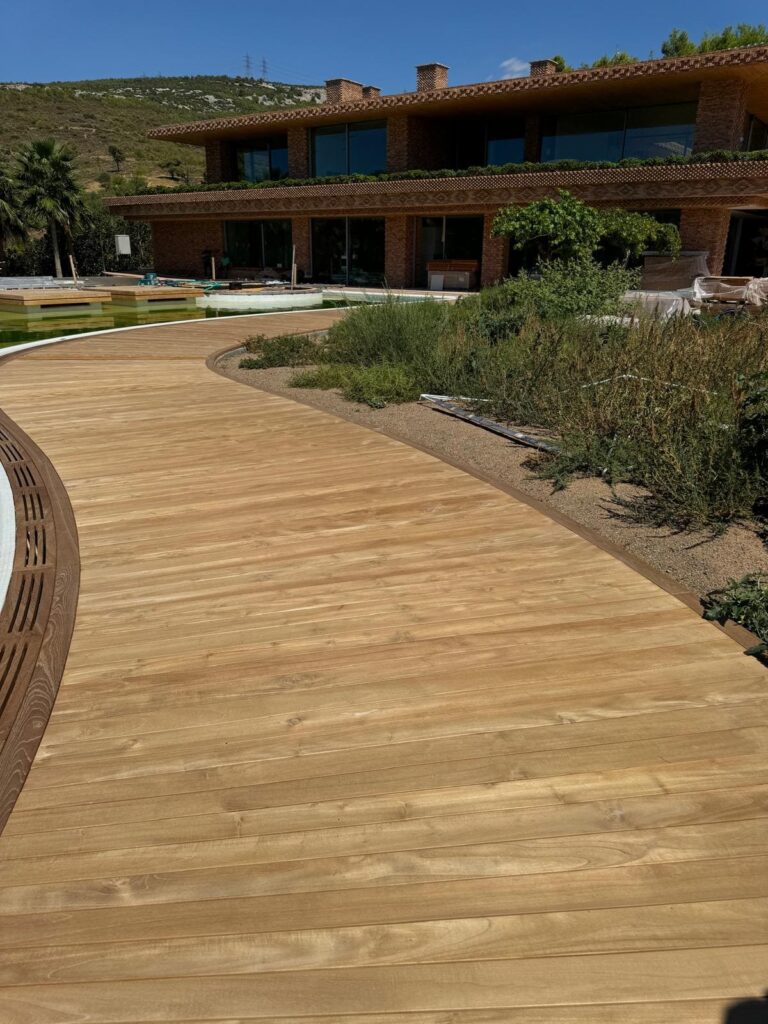
Coastal decks
The Best Decking for Oceanfront Homes in Miami Beach, Sunny Isles and Key Biscayne
On an oceanfront deck in Miami Beach, Sunny Isles Beach or Key Biscayne, the parts that give out first are usually the metal ones: screws, connectors and the frame. This guide covers boards, fasteners and substructure for decks that sit right on the water.
What salt air does to a deck
An oceanfront deck works under three conditions at once: salt carried on the wind, strong sun for most of the year, and humidity that rarely lets surfaces dry out completely. Each one targets a different part of the deck. Sun works on the color and surface of the boards, humidity on anything organic in the frame, and salt on metal.
Salt is the hardest of the three to see, because the damage starts underneath the boards and around the screws. Connector manufacturer Simpson Strong-Tie lists ocean salt air among the conditions that cause corrosion in building hardware, and its engineering blog notes that the concentration of salt spray in the air drops sharply between 300 and 3,000 feet from the shoreline. A deck on an oceanfront lot sits at the near end of that range, where exposure is at its highest.
Choosing the best decking for oceanfront homes therefore means choosing three layers that work together: the boards you walk on, the fasteners that hold them and the frame underneath. The sections below follow that order.
Boards: composite, hardwood and bamboo by the ocean
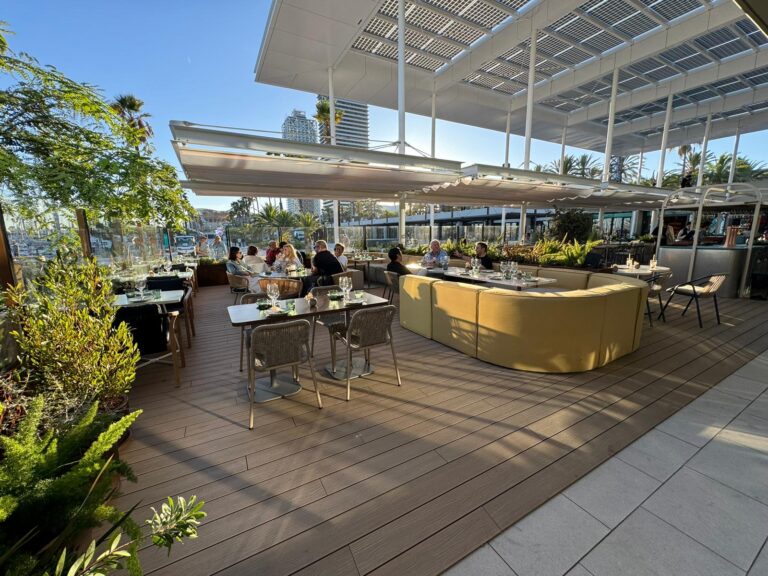
Most guides to the best decking for coastal areas compare board materials, and the board does matter: it is the surface you see, touch and maintain. Exterpark offers composite decking, hardwood and bamboo, and all three install on the same hidden clip and aluminum frame, so the choice comes down to appearance, upkeep and how the space will be used.
Exterpark Tech (composite)
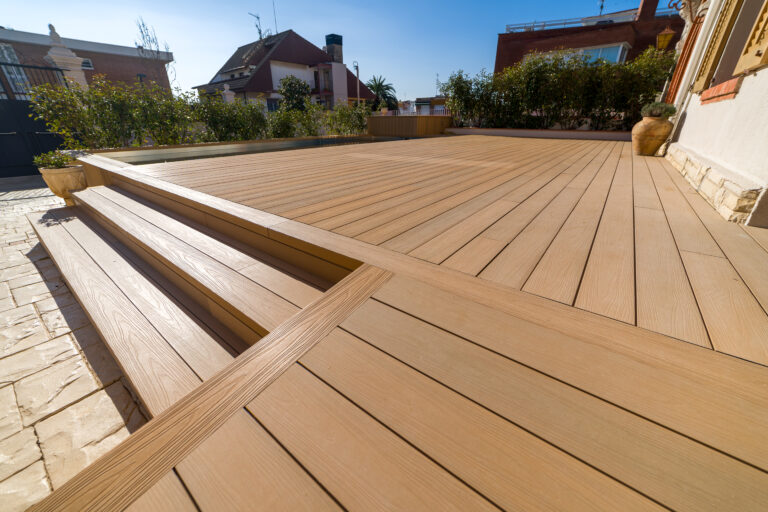
The low-maintenance option for full sun and salt air: no staining or sealing, a realistic wood texture and a 20-year warranty against fading under normal use. An occasional rinse with fresh water keeps salt residue from building up on the surface.
Exterpark Wood (hardwood)
Ipe, Kumaru, Teak and thermo-treated wood, including FSC-certified Teak, for projects where real timber is the point. In sun and salt air, hardwood needs periodic cleaning and oiling to hold its original color; left alone, it weathers toward silver-gray.
Exterpark Bamboo
Bamboo carbonized under a patented press into a structural board with the look of wood. A natural material for oceanfront projects that put weight on sustainability.
The weak point is the fastener, not the board
On a conventional deck, every board is held by screws driven through its face. By the ocean, those screw heads are the most exposed metal on the deck: they collect salt, rust and stain the wood or composite around them, and each hole gives moisture a way into the board. A better screw grade improves the odds. Simpson Strong-Tie states that Type 316 stainless steel provides a higher level of corrosion resistance than Type 304, and also that even stainless steel can corrode. The screw, however, stays on the surface where the salt lands. Exterpark moves the fastening off the surface altogether: the patented Shark Clip, the hidden clip system behind every Exterpark deck, holds each board from below and locks it onto an aluminum joist, so nothing pierces the walking surface.
No screws through the surface
Nothing pierces the board face, so the walking surface has no screw heads to rust, streak or work loose.
Every board removable
Each board can be lifted on its own and clicked back into place, which turns inspection, cleaning underneath or replacing a damaged board into a small job.
Recognized at IBS
The Shark Clip was named Most Innovative Construction Tool at IBS, the International Builders’ Show, and installs up to 3x faster than screw-down decking.
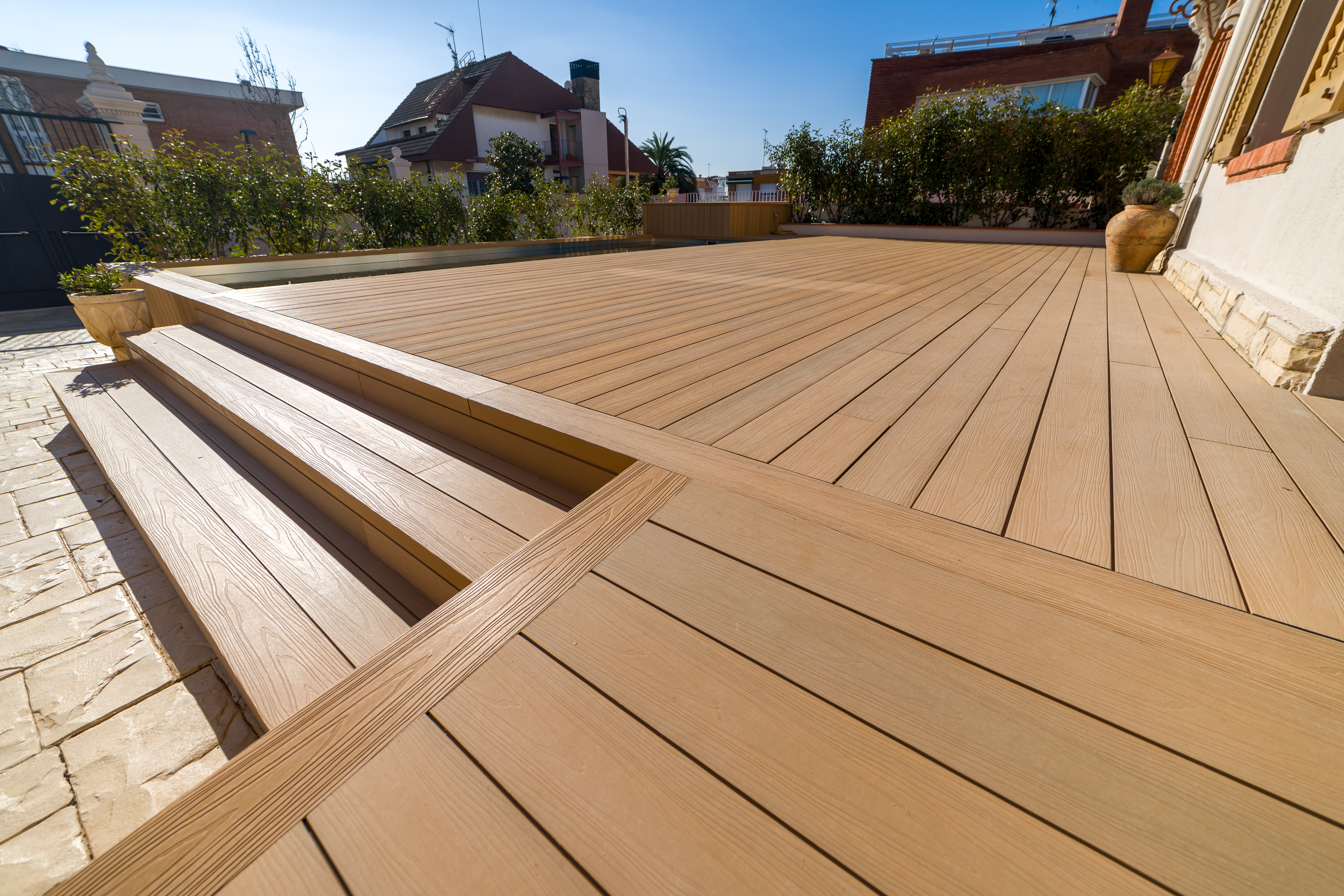
The frame underneath: why aluminum
The frame is the part of an oceanfront deck that is hardest to inspect and the most disruptive to repair, because the boards have to come up first. A wood frame in South Florida deals with constant humidity and with termites: University of Florida entomologists (UF/IFAS) describe the Miami to Fort Lauderdale area as the only place in the continental U.S. where the ranges of Asian and Formosan subterranean termites overlap. A steel frame swaps the termite risk for the corrosion described above.
Exterpark boards sit on an aluminum substructure. Aluminum will not rust and gives termites nothing to eat, which takes both of those problems out of the frame.
The structural design of the deck, including spans, attachment to the building and permits, belongs to the project engineer and the local building department. Those decisions stay with the project team whatever the frame is made of.
Condo balconies and terraces on the beach
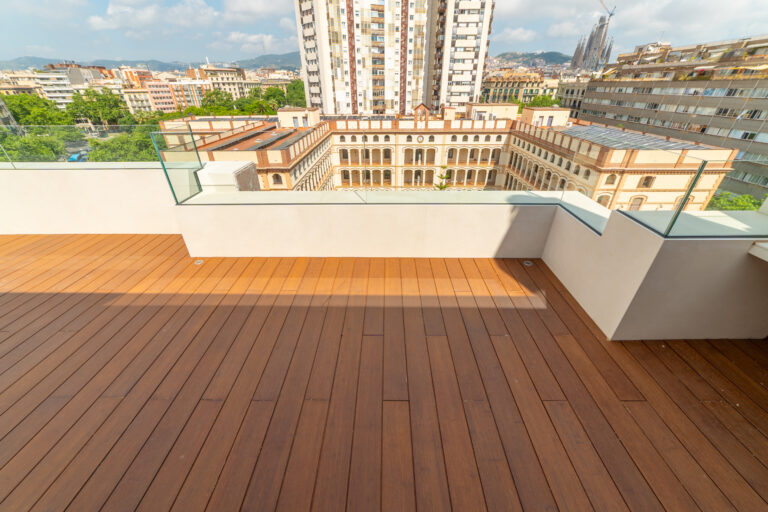
Much of the oceanfront housing in Miami Beach, Sunny Isles Beach and Key Biscayne is in condominium buildings, where a deck sits on a concrete slab over a waterproofing membrane that belongs to the building. A deck laid over that surface has to keep the membrane reachable, which is why individually removable boards matter so much in terrace decking for condos.
Inspect the membrane without demolition
Lift the boards over the area in question, check the slab or membrane below and click the boards back. No cutting, drilling or replacement is involved.
Check with the condo association first
Associations often set their own requirements for work on balconies and terraces. Confirm them with building management before choosing materials or scheduling the installation.
Confirm the load with a structural professional
Anything added to a balcony or terrace adds weight. A structural professional should confirm what the slab can carry before the project is specified.
Keep the drainage working
The existing slope and drains have to keep moving water off the slab underneath the new surface. Plan the deck layout around them from the start.
Oceanfront decks in Miami Beach and Key Biscayne
Miami Beach, Sunny Isles Beach and Key Biscayne share the same exposure: barrier islands with the Atlantic on one side and bay or Intracoastal water on the other, salt in the air most days and strong sun all year.
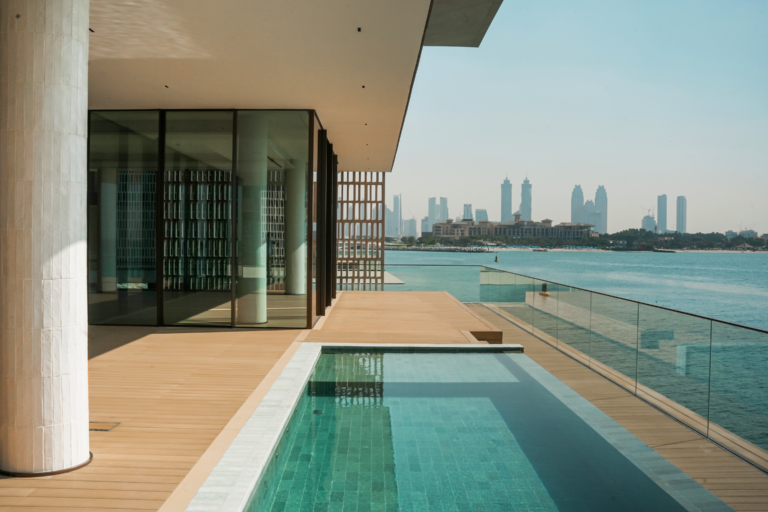
The housing varies from one to the next. Sunny Isles Beach is largely high-rise condominium towers, where balconies and terraces are the typical project. Miami Beach and Key Biscayne mix condo buildings with single-family homes, where a deck can wrap a pool or extend a living room toward the water. Whether the project is composite decking on a Key Biscayne pool terrace or hardwood on a Sunny Isles Beach balcony, the boards go on the same hidden clip and aluminum frame.
Exterpark supplies the area from a warehouse in Hialeah through Cedro Rojo, its authorized distributor in the United States. Product lines, colors and installation options for the beach communities are on the page for decking in Miami Beach.
Common questions
Oceanfront decking FAQ
Common questions about decking near the ocean in South Florida.
01Does composite decking fade near the ocean?
02What screws should I use near salt water?
03Is hardwood a good choice for a beachfront deck?
04What is the best decking for coastal areas?
05Can deck boards be removed to inspect a condo terrace?
Plan Your Oceanfront Deck With a Specifier
Send us the location, the surface you are building over and how the space will be used, and we will recommend the board line and installation system for your oceanfront project. Write to usa@exterpark.com or use the contact form.